How to efficiently manage supplies in restrooms.
Publication date: 3 February 2026
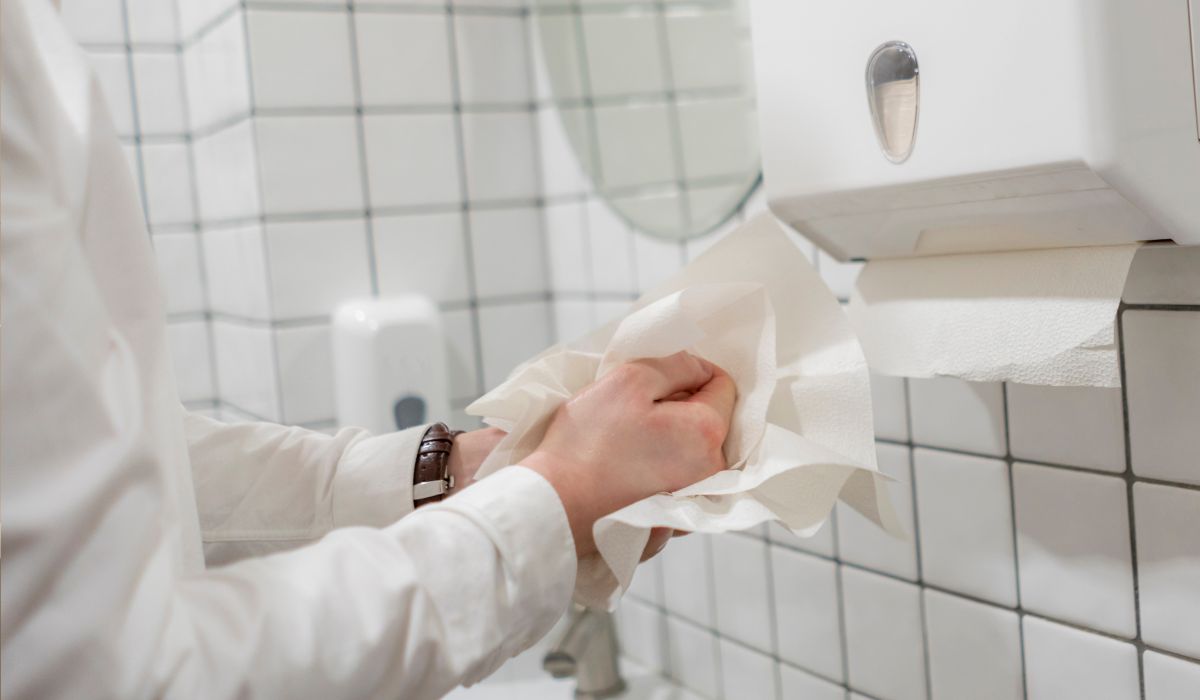
Managing supplies in public restrooms is one of the most underappreciated areas of facility management. Toilet paper, paper towels, soap, disinfectants, and trash bags are often viewed as minor operating costs. In practice, however, these items generate the highest number of service requests, user complaints, and unplanned maintenance calls.
A shortage of toilet paper or soap is not just a minor inconvenience for users. It’s a sign of organizational chaos, low standards, and a lack of control. What’s more, in many public facilities, thousands of people use the restrooms every day, and any interruption in the availability of basic supplies poses a real risk to the facility’s reputation and hygiene standards.
Why Consumables Are a Real Operational Problem
In many facilities, restrooms are the only space used by all visitors without exception. A shopping mall customer, a hospital patient, a school student, an office worker, and a driver at a gas station all have different expectations, but one common requirement: the restroom must work.
Problems with consumables share several common characteristics:
- They appear suddenly and are visible right away
- cause frustration among users
- require an immediate response from staff
- They escalate very quickly into feedback and complaints
Importantly, in most cases, these issues aren’t due to a lack of funding, but to a lack of a system. There’s paper, there’s soap, there are towels—just not where they’re needed and not when they’re needed.
The Most Common Mistakes in Consumables Management
The first and most common mistake is reacting instead of planning. Supplies are restocked only when they run out, rather than when they should be restocked.
The second mistake is a lack of standardization. Different dispensers within a single facility, different paper sizes, and different soap refills create logistical chaos and increase the risk of errors.
The third mistake is choosing dispensers with the wrong capacity for the level of traffic. Small dispensers in high-traffic restrooms will always cause problems, regardless of how often they are cleaned.
The fourth mistake is ignoring misuse and uncontrolled consumption. Improperly selected dispensers contribute to the waste of materials and, in extreme cases, even to their theft.
Basis: analysis of the facility and actual traffic volume
Effective management begins with understanding how a restroom is actually used. It’s not enough to know that a facility is “large” or “small.”
Key questions to ask yourself:
- How many people actually use the restroom during the day?
- Is traffic steady, or are there peak hours?
- Is the restroom available at all times, or only during certain hours?
- Are the users mainly adults, children, patients, or employees?
- Is there an increased risk of vandalism?
Only on this basis can one sensibly select equipment and plan material logistics.
Selecting the Right Dispensers: The Key to Controlling Consumption
A dispenser isn’t just a container for paper or soap. It’s a tool for managing consumption.
When it comes to toilet paper, the format and dispensing method are of great importance. Systems with large rolls, central dispensing, or length control significantly reduce paper waste and the frequency of restocking. Small rolls in high-traffic restrooms are a surefire way to run out of paper constantly.
The same goes for paper towels. Dispensers that dispense sheets that are too long or allow multiple sheets to be pulled out at once result in waste that can add up to a surprisingly high amount over the course of a month.
When it comes to soap, portion control is key. Dispensers that do not regulate the amount of product almost always lead to excessive use. Systems with precise dosing or foam dispensers can reduce consumption by as much as several dozen percent without compromising user comfort.
Capacity is more important than how often you clean
A common mistake in restroom management is assuming that cleaning more often will solve the problem of running out of supplies. In reality, frequent cleaning is no substitute for improperly sized dispensers.
In high-traffic restrooms, dispensers should have enough supply to ensure safe operation throughout the entire period between service visits. This means:
- large rolls of paper
- large-capacity soap dispensers
- Waste bins sized to accommodate actual volume
If storage capacity is too low, even a well-organized staff will be unable to prevent temporary shortages.
Standardization as the Foundation of Logistics
One of the most underappreciated aspects of consumables management is the standardization of equipment.
If a single facility uses several types of dispensers, several paper sizes, and different soap refills, inventory management becomes unnecessarily complicated. The number of inventory items increases, as do the risk of errors and logistics costs.
Standardization allows for:
- simplify ordering
- reduce inventory levels
- reduce the time it takes to refill
- reduce the risk of staff errors
In large facilities, the difference between chaos and standardization very quickly translates into real savings.
Equipment Materials and Service Life
Consumables management isn’t limited to the consumables themselves. The durability of dispensers and accessories is of great importance.
Stainless steel equipment is more resistant to damage, intensive cleaning, and vandalism. This means fewer replacements, breakdowns, and unplanned costs.
When selected appropriately, ABS plastic works well in facilities with lower traffic, but in high-traffic areas it can result in additional costs associated with damage and the need to replace components.
From a management perspective, it is important to consider not only the purchase price but also the total cost of maintaining the system.
Planning for Replenishment Instead of Firefighting
Effective management of consumables is based on predictability.
The best facilities don’t wait for a signal that something is running low. They operate on a schedule based on actual usage. This means:
- fixed checkpoints
- topping off to a specified level
- long-term consumption analysis
As a result, the cleaning staff can work calmly and efficiently, and the manager has control over costs.
The Role of Staff and Ease of Use
Even the best system won’t work if it’s too complicated to use on a daily basis. Dispensers should be intuitive, easy to open and refill, and consumables should be clearly assigned to specific equipment.
Ease of use shortens service time, reduces the number of errors, and minimizes staff frustration. This is an aspect that is often overlooked during the design phase but becomes apparent during day-to-day operation.
How we approach this at Faneco
At Faneco, we view the management of consumables as an integral part of the overall toilet system. We do not sell individual dispensers in isolation from the rest of the system.
We begin every project by analyzing the facility, traffic volume, and the property manager’s expectations. We then select equipment that helps monitor usage, reduces the number of service calls, and simplifies logistics.
As a result, the toilet operates reliably, and consumables are no longer a source of constant operational problems.
Summary
Effective management of supplies in public restrooms isn’t just about restocking paper and soap more frequently. It’s about creating a system that operates predictably, is error-resistant, and is tailored to real-world conditions.
The right choice of dispensers, capacities, materials, and service standards helps reduce costs, improve hygiene, and significantly enhance user comfort. And it is precisely these elements that determine how a facility is perceived on a daily basis.