What should you look for when buying a toilet paper holder?
Publication date: 22 December 2024
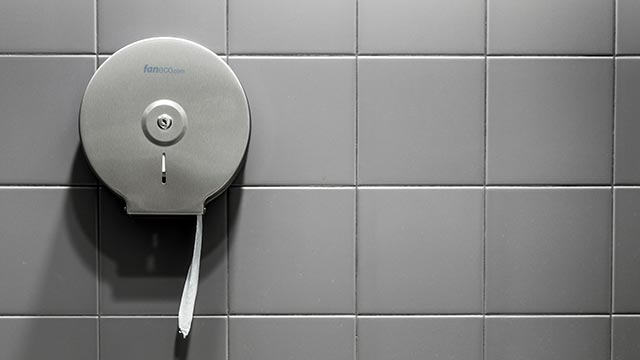
A toilet paper holder may seem like a simple piece of equipment, but it plays a crucial role in a public restroom. It determines whether users will have easy access to toilet paper, whether staff will have to refill the rolls constantly, whether paper will be wasted, and whether the restroom will look neat and tidy throughout the day. A poorly chosen toilet paper dispenser quickly becomes a source of problems. A good one operates discreetly, efficiently, and without constant staff intervention.
Why is choosing the right toilet paper holder important?
In a public restroom, toilet paper is an absolute must. If it runs out, users no longer focus on the tiles, fixtures, or the interior design. Instead, they judge the facility as poorly managed. A lack of toilet paper in a stall is one of those situations that immediately ruins the experience and can lead to complaints.
Therefore, the toilet paper dispenser should be selected based on the type of facility, foot traffic, service frequency, and type of refills. One model will work well in a small office, another in a restaurant, another in a school, and yet another at a gas station, train station, stadium, or shopping mall.
At Faneco, we often point out that public restroom fixtures should be evaluated not only on the day of installation, but above all after several months of daily use. Does the dispenser still operate smoothly? Is the housing intact? Does the paper fall out? Is it easy for staff to refill the dispensers? Do users avoid taking out the entire roll? Is the stall kept tidy?
A good toilet paper dispenser should combine capacity, durability, ease of use, ease of maintenance, and aesthetic appeal.
First, determine the type of toilet
The first question is: Where will the toilet paper holder be installed? That’s the most important starting point.
In a small office, private office, or service space, a simple toilet paper dispenser or a holder for a standard roll is often sufficient. Foot traffic is moderate, users are predictable, and staff can easily restock the paper.
In a restaurant, hotel, café, or beauty salon, it’s not just functionality that matters—appearance does, too. The container should complement the decor and be attractive, clean, and unobtrusive. In these kinds of places, the restroom is part of the customer experience.
At schools, clinics, workplaces, or sports facilities, durability and capacity will be more important. Paper runs out faster, and the paper feeder must withstand heavy use.
In high-traffic public restrooms—such as those at train stations, airports, gas stations, shopping malls, or stadiums—jumbo toilet paper dispensers, key-locked models, and high-capacity solutions work best. In such places, the paper can run out very quickly if the dispensers are too small.
A standard roll, a jumbo roll, or a central dispensing system?
One of the most important decisions is choosing the type of paper. The container must be compatible with the paper roll that will be used at the facility.
The simplest holders are those designed for a standard roll of toilet paper. They work well in small restrooms, offices, hotel rooms, and low-traffic areas. Their advantage is their simplicity and the ease with which the paper can be accessed. The disadvantage is their small capacity. In a public restroom, such a roll can run out very quickly.
The jumbo toilet paper dispenser is designed for large rolls. It’s a good solution for high-traffic areas. A large roll lasts longer, and the lockable housing reduces the risk of theft and uncontrolled unrolling of the paper.
The mini jumbo is a compromise between a standard roll and a large jumbo container. It works well in places with moderate foot traffic where there isn’t room for a very large dispenser in the restroom.
There are also central dispensing systems in which the paper is pulled from the center of the roll. These can work well in facilities where controlled paper dispensing and minimizing waste are important. However, it is important to remember that such a system requires the appropriate cartridges.
Before purchasing, it’s a good idea to check the exact dimensions of the roll—its diameter, width, core diameter, and dispensing method. Not every toilet paper holder fits every roll.
Capacity is of the utmost importance
Capacity is one of the most important factors. A toilet paper dispenser that’s too small means more frequent restocking, a higher risk of running out, and more work for staff. In high-traffic facilities, such a mistake becomes apparent very quickly.
In a small restroom for just a few employees, you can choose a smaller dispenser or a compact container. In a restaurant, school, office, or hotel restroom, it’s better to opt for a larger dispenser that doesn’t need to be refilled after every wave of users. In high-traffic areas, consider a jumbo paper holder or a model with space for a spare roll.
The appropriate capacity should be tailored to the cleaning schedule. If staff check the restroom every hour, the requirements are different than in a location where cleaning takes place several times a day. If the facility experiences peak times—such as school breaks, lunch hours at a restaurant, or weekend traffic at a shopping mall—the dispenser must be set up to handle those specific periods.
The best toilet paper holder is one that minimizes the risk of running out of toilet paper between inspections.
Material. ABS or stainless steel?
Toilet paper holders are most often made of ABS plastic or stainless steel. Both materials have their uses.
ABS plastic is lightweight, attractive, and practical. A high-quality ABS dispenser is ideal for offices, service establishments, restaurants, hotels, schools, and many public restrooms with moderate traffic. It is easy to clean, usually affordable, and available in a variety of colors.
Stainless steel is the better choice where greater durability is required. This applies to train stations, gas stations, sports facilities, shopping malls, public restrooms, industrial facilities, and places prone to vandalism. A steel toilet paper dispenser is durable, sturdy, and can withstand heavy use.
The choice of material should depend on the installation location. For a restroom in a small office, it isn’t always necessary to choose the heaviest steel model. However, for a high-traffic public restroom, a plastic handle that is too flimsy may wear out quickly.
It’s also worth keeping in mind how easy it is to clean. A smooth casing, the absence of hard-to-reach nooks and crannies, and resistance to cleaning agents are very important in everyday use.
Lock and Cartridge Security
In public restrooms, the toilet paper dispenser should be locked with a key. This prevents the roll from being stolen, accidentally removed, unrolled entirely, or causing a mess in the stall.
In high-traffic areas, a lock is practically a must. If the toilet paper is left loose or the roll is sitting on the toilet tank, it can quickly fall to the floor, get wet, or be taken. A lockable container keeps the toilet paper in one place and protects it from getting dirty.
It’s worth checking the quality of the lock. It should operate smoothly, be able to withstand frequent opening, and ideally be compatible with the facility’s other accessories. If each dispenser requires a different key, staff waste time. A consistent line of equipment makes daily maintenance easier.
A good toilet paper dispenser should allow for quick refilling, but at the same time, it should not be easy for an unintended user to open.
Paper Feeding Method
Not every dispenser feeds paper in the same way. With a standard dispenser, the user unrolls the roll themselves. With a jumbo dispenser, the paper is usually pulled out through the bottom opening. In central dispensing systems, the user pulls the paper from the center of the roll.
The way the paper is dispensed affects paper consumption. If the paper unrolls too easily, users often take more than they need. If the dispensing opening is awkward, the paper tears, jams, or feeds unevenly. This causes frustration and a mess.
A good toilet paper dispenser should allow for a smooth flow of paper while also limiting uncontrolled use. The paper should be easily accessible while seated, without having to turn around, stand up, or reach behind you for the roll.
It’s also a good idea to check whether the paper falls inside the housing after it breaks off. With some lower-quality models, the user has to search for the end of the paper afterward, which is inconvenient and unhygienic.
Paper Compatibility
One of the most common mistakes when buying a printer is choosing a printer without checking what kind of paper it will accept. This can lead to problems with buying replacement cartridges, paper jams, or the paper wearing out too quickly.
Before making a selection, you need to check the maximum roll diameter, paper width, core diameter, and dispensing type. For jumbo feeders, the roll diameter is particularly important. A roll that is too large simply won’t fit. One that is too small may not function properly inside the housing.
It’s also worth considering whether the facility wants to use a single, specific cartridge system or prefers greater flexibility. Some dispensers are more versatile, while others require specific rolls. A closed system can be convenient from an organizational standpoint, but it sometimes limits the choice of suppliers.
A well-chosen toilet paper holder should be compatible with toilet paper that is readily available, economical, and appropriate for the facility’s standard.
Installation in the cab
The installation location is extremely important. The toilet paper holder should be within reach of someone sitting on the toilet. It shouldn’t be mounted too high, too low, too far away, or behind the user. It’s a small detail that greatly affects comfort.
In small cabins, you need to make sure the container doesn’t take up too much space. A large jumbo dispenser may be practical, but if the cabin is very narrow, it can get in the way. In that case, it’s a good idea to choose a more compact model or plan the installation differently.
The container should not interfere with the handrails, toilet brush, sanitary waste bin, door, or bag holder. This is particularly important in a restroom accessible to people with disabilities. The toilet paper must be within the user’s reach, and the dispenser must not block the maneuvering space or interfere with transferring from a wheelchair.
Before installation, it’s a good idea to actually sit down or simulate using the toilet to check whether the container is easily accessible. It’s simple, and it helps you avoid many mistakes.
Paper holder in the accessible restroom
A restroom for people with disabilities requires special attention. The toilet paper holder must be placed where the user can reach it effortlessly. It must not be too far away, too high, or on a side that makes it difficult to use the handrail.
In an accessible restroom, everything should function as a single system: the toilet bowl, grab bars, sink, trash can, soap dispenser, towel dispenser, and toilet paper holder. If even one element is installed incorrectly, the room’s overall functionality is compromised.
It’s worth remembering that accessible restrooms aren’t used only by people in wheelchairs. They’re also used by seniors, people recovering from injuries, pregnant women, people with temporary mobility limitations, and parents with children. For them, easy access to toilet paper is extremely important.
In rooms like these, you should avoid large, bulky models that restrict movement. It’s better to choose a solution that’s stable, easy to use, and properly installed.
Container vs. Sanitary Bin
When buying a toilet paper dispenser, it’s a good idea to consider the rest of the restroom’s fixtures right away. In women’s, coed, and accessible restrooms, a sanitary waste receptacle is often needed. It should be positioned so that it does not block access to the toilet, toilet paper, or handrails.
The lack of a sanitary waste bin may lead to waste being flushed down the toilet. This, in turn, increases the risk of sewer blockages and maintenance issues. Properly equipping the restroom therefore benefits not only the users but also the facility manager.
The toilet paper holder, toilet brush, trash can, hook, and lock should form a logical layout. If each item is placed randomly, the bathroom quickly becomes uncomfortable and chaotic.
In small restrooms, it is especially important for the fixtures to be compact and installed in well-thought-out locations. In larger public restrooms, you can opt for more spacious solutions, but you still need to ensure user comfort.
Aesthetics and Consistency of the Furnishings
The toilet paper holder is a prominent feature of the restroom, so it should match the rest of the fixtures. In a public restroom, consistency is important not only for aesthetic reasons but also for organizational ones.
If the paper dispenser, soap dispenser, paper towel holder, trash can, and toilet brush are all from the same line or share a similar style, the restroom looks more professional. Users get the impression that the facility is well-maintained and thoughtfully designed.
In modern interiors, stainless steel models, black accessories, minimalist enclosures, or uniform series made of ABS plastic work well. In schools, clinics, and technical facilities, durability and ease of cleaning are often more important than decorative appearance.
It’s best to avoid a haphazard mix of different colors, shapes, and materials. Even a spotless restroom can look less professional if each piece of fixtures comes from a different line and doesn’t match the rest.
Ease of Refilling and Maintenance
For cleaning staff, simplicity is key. A toilet paper holder should open easily, allow for quick roll replacement, and not require complicated paper placement.
It’s worth paying attention to the size of the opening, the stability of the lid, how the roll is secured, and access to the interior. If replacing the paper takes a long time or requires struggling with the housing, this becomes a real problem in many restrooms.
The paper level indicator window is very practical. It allows staff to see when the roll is running low without having to open the dispenser. In high-traffic restrooms, this feature saves time and reduces the risk of running out of paper.
It’s helpful if the dispenser is part of a broader system of equipment. A single key, a similar opening mechanism, and consistent cartridges make it easier to manage the entire facility on a daily basis.
Resistance to vandalism and heavy use
In public restrooms, fixtures must be able to withstand much more wear and tear than those at home. The toilet paper holder is touched, tugged on, opened, closed, sometimes hit by a bag, or accidentally kicked. In some places, you also have to expect attempts at vandalism.
That is why, in high-traffic areas, it is best to choose sturdy, lockable models made of durable materials that fit snugly against the wall. A loose mount, a flimsy casing, or a weak lock will quickly become a problem.
Stainless steel is a good choice in situations where there is a higher risk of damage. ABS plastic may be sufficient in areas with a lower risk, provided it is of good quality and designed for public use.
Installation is also important. Even the best toilet paper dispenser won’t last if it’s mounted incorrectly on the wall. You need to choose the right anchors, check the type of surface, and make sure the dispenser doesn’t rattle with every use.
Monitoring Paper Usage
A well-chosen dispenser can reduce paper consumption. The goal is not to make it difficult for users to use the restroom, but to prevent waste. In public places, toilet paper is often unrolled excessively, pulled out in large pieces, or used for purposes other than its intended use.
Jumbo feeders and central dispensing systems can help control paper dispensing. The enclosed housing restricts access to the entire roll, and the user pulls paper through a designated opening. This usually reduces clutter in the cab.
However, it’s best to avoid solutions that are too inconvenient. If the paper tears off in small pieces every time, the user will get frustrated and start yanking at it. A good toilet paper dispenser should dispense the paper smoothly but in reasonable amounts.
Monitoring wear and tear affects costs, service frequency, and cabin cleanliness. This is one of the reasons why choosing the right container is economically important.
Dimensions and Fit for a Small Cabin
Not every dispenser fits in every stall. In small restrooms, you need to pay special attention to the depth and width of the container. A large “jumbo” model may offer great capacity, but if it sticks out too far, it will get in the way of users.
Before making a purchase, it’s a good idea to measure the bathroom and check the locations of the door, toilet bowl, toilet brush, trash can, grab bars, and any pipes. It’s also a good idea to consider how the toilet bowl opens. If the toilet opens forward, there must be enough space for maintenance.
In very small restrooms, a compact mini-jumbo toilet paper holder or a dispenser that holds two standard rolls may sometimes be a better solution. It’s important to strike a balance between capacity and convenience.
It’s not worth buying the largest model just because it has the largest capacity. When it comes to public restroom fixtures, what matters is how well they’re suited to the conditions, not just their size.
Purchase and Operating Costs
The price of the container is only part of the cost. In the long run, the cost of paper, cartridge wear and tear, staff time, refill frequency, and product durability may be more important.
A cheap holder may be sufficient in a small restroom, but in a public facility, it can lead to higher costs due to frequent shortages, theft of toilet paper rolls, messes, and faster wear and tear. A more expensive, sturdy, key-locked dispenser may prove to be more cost-effective if it reduces paper waste and requires less maintenance.
It’s also worth checking whether paper compatible with a given system is readily available and reasonably priced. If the dispenser requires a non-standard refill, you’ll need to factor that into your maintenance costs.
The best choice isn’t always the cheapest model. It’s the one that will be the most convenient, durable, and cost-effective for everyday use in a given setting.
The Most Common Mistakes When Buying a Toilet Paper Holder
The first mistake is choosing a capacity that’s too small. As a result, the paper runs out quickly, and staff have to keep refilling the cartridges.
The second mistake is failing to check compatibility with the paper. The container may look fine, but if the roll doesn’t fit or doesn’t unroll properly, the product won’t work as intended.
The third mistake is buying a model without a lock for a public restroom. In public places, a lockable enclosure is very important.
The fourth mistake is installing the paper tray in an inconvenient location. The paper must be accessible while seated. If the user has to turn around or stand up, the paper tray is in the wrong place.
The fifth mistake is choosing a material that is too delicate for a high-traffic area. The sixth is a lack of consistency with the rest of the furnishings. The seventh is ignoring the needs of people with disabilities.
The eighth mistake is focusing solely on the purchase price, without taking into account the costs of paper, maintenance, and the product’s durability.
Summary
When buying a toilet paper holder, you need to consider much more than just its appearance and price. The most important factors are: the type of paper, capacity, material, closure, dispensing method, ease of refilling, installation location, damage resistance, and suitability for the level of foot traffic.
In a small office, a simple holder or a compact dispenser may suffice. In a restaurant or hotel, aesthetics and user convenience are key. In a school, gas station, train station, or shopping mall, capacity, durability, and protection of the refill will be the most important factors.
The best toilet paper holder is one that fits a specific restroom. It provides easy access to toilet paper, reduces waste, makes the staff’s job easier, and helps keep the restroom clean. That’s why it’s worth treating the selection of a toilet paper holder as an important part of public restroom design, rather than a minor purchase at the end of a renovation.