Accessible Hotel Toilets: How to Design and Equip Them
Publication date: 6 May 2024
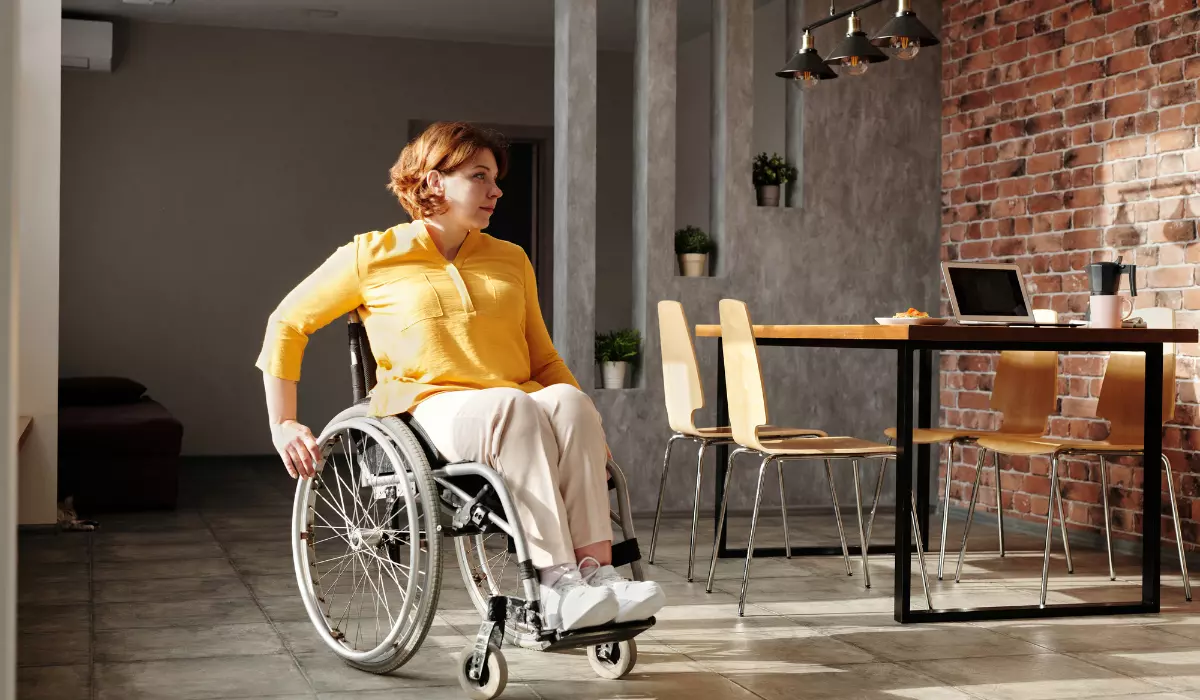
A hotel is synonymous with relaxation, comfort, and guest service. For a person with disabilities, a senior, a parent with a young child, or someone recovering from an injury, however, the comfort of their stay begins with very practical questions. Can they easily enter the building? Can they move freely through the corridors? Does the guest room offer adequate space? Is the bathroom genuinely accessible? Is the toilet truly a functional space that can be used safely and independently, rather than merely “a slightly larger room with a grab bar”?
An Accessible Toilet Is More Than Just a Requirement
An accessible toilet in a hotel should never be treated as a mere formality. While regulations, technical requirements, and accessibility standards certainly matter, guest experience is paramount in practice. A guest who books an accessible room is not looking for “special treatment” — they simply want the opportunity to enjoy the hotel just like anyone else.
An accessible toilet and bathroom directly underpin a guest’s sense of safety, privacy, and independence. Guests should be able to enter the room, close the door, and use the WC, washbasin, shower, soap dispenser, toilet paper dispenser, hand towels or hand dryer, waste bin, and emergency alarm system without having to ask for assistance at every turn.
In a hotel setting, this is particularly critical because the bathroom is an inherently private space. If poorly designed, the guest experiences friction every single day of their stay. Narrow doorways, an awkwardly positioned WC pan, lack of space beside the bed, a toilet roll dispenser mounted too high, or a shower tray with a threshold can render even the most luxurious hotel virtually inaccessible to them.
At Faneco, we frequently emphasise that accessibility is not simply a matter of bolting on a single grab bar. It is a comprehensive system of design and specification decisions.
Who Is an Accessible Toilet Designed For?
While wheelchair users are the group most commonly discussed, they represent just one user profile. Accessible toilets are also used by seniors, post-operative patients, individuals with temporary injuries, people with neurological conditions, pregnant women, those with reduced grip strength, people of short stature, parents with young children, and guests travelling with heavy luggage.
This distinction is crucial because hoteliers cannot always anticipate who will check in. A guest may not hold a formal disability certificate yet still require barrier-free bathroom access. An elderly guest may be fully ambulant but rely on sturdy grab bars beside the WC and shower. Someone recovering from an injury might not use a wheelchair, but could struggle to step over a high shower tray threshold.
This is why the best hotel solutions are universal. They assist guests with disabilities while elevating comfort for a wide variety of other guests. A level-access walk-in shower, robust grab bars, slip-resistant flooring, effective lighting, clear signage, and an intuitive layout benefit a far broader spectrum of visitors than wheelchair users alone.
A hotel that adopts this mindset does not simply create a “special room” — it creates a space that is genuinely more welcoming to diverse guests.
Accessibility Begins Before the Bathroom Door
Even the most meticulously designed accessible toilet serves little purpose if the guest cannot reach it. In a hotel, one must consider the entire user journey: from the car park, main entrance, and reception desk, through the lift, circulation corridors, and guest room door, right into the bathroom.
If there is a step at the entrance, reception is accessible only via stairs, the lift is undersized, or the corridor is obstructed by decorative displays, an accessible bathroom alone will not solve the issue. Accessibility must be seamless and continuous.
Pre-booking information is equally vital in hospitality. Guests need to know whether the property offers an accessible room, how the bathroom is configured, whether there is a level-access shower, what the clear door opening widths are, whether grab bars and an emergency alarm system are installed, and whether a lift is available on site. Generic marketing claims like “disabled-friendly hotel” are rarely sufficient.
Publishing specific technical details and authentic photographs is industry best practice. A guest with a disability needs to evaluate whether the facilities meet their personal needs. Two wheelchair users may have entirely different requirements when it comes to WC transfers, grab bar layouts, or shower access.
Accessible Bathrooms in Hotel Guest Rooms
The primary accessible washroom in a hotel is typically located within an adapted guest room. This is where guests use the bathroom most frequently and in complete privacy. In such spaces, every single detail counts.
Adequate manoeuvring space is fundamental. A wheelchair user must be able to enter the bathroom, close the door, turn around, and approach the WC, washbasin, and shower. Across many design standards, a clear manoeuvring space of 150 × 150 cm serves as the benchmark. Crucially, this dimension must exist in practice, not just on architectural drawings — kept completely clear of waste bins, furniture, radiators, structural columns, decorative items, and housekeeping supplies.
Doors should provide sufficient clear opening width, operate smoothly, and feature flush, level thresholds. In compact rooms, extra care must be taken to ensure the door swing does not obstruct the manoeuvring area. In many cases, sliding doors offer an effective alternative, provided they glide effortlessly and incorporate safety stops.
An accessible hotel bathroom must never be designed around the WC alone. The shower, washbasin, mirror, soap dispenser, paper towel dispenser or fabric towel rails, toilet paper dispenser, waste bin, robe hooks, emergency alarm system, and toiletry shelf space are equally essential.
The WC Pan and Toilet Transfer Space
The WC pan in an accessible washroom must facilitate safe and comfortable transfers. This is one of the most critical aspects of the layout. Users rely on varied transfer techniques: lateral, angled, frontal, or assisted by a carer. Consequently, the clearance around the pan must never be left to chance.
Key considerations include lateral transfer space beside the WC pan, seat height, robust grab bars, and the correct positioning of the toilet paper dispenser. Toilet paper must be easily reachable from a seated position without twisting, straining, or reaching behind the back. It may seem like a minor detail, but in reality, it defines the user’s independence.
Grab bars around the WC must be secure, properly located, and tailored to transfer requirements. In hotel bathrooms, drop-down grab bars beside the pan prove particularly effective, allowing the space to be adapted to the guest’s needs while facilitating smooth transfers.
Installing grab bars merely to “tick a compliance box” is a critical error. If a grab bar is placed too far away, too high, too low, or on the wrong side, it will fail to support the user. Worse still, it can become an outright obstacle.
Accessible Washbasins for Diverse Needs
A washbasin in an accessible washroom must provide clear wheelchair approach and allow comfortable use from a seated position. This requires an appropriate rim height, ample leg clearance underneath, user-friendly brassware, and the absence of vanity units that could obstruct the user’s knees.
Tap brassware must be effortless to operate. Single-lever mixers, extended lever handles, or non-touch sensor taps perform exceptionally well. In a hotel setting, however, non-touch solutions must be ultra-reliable; sensors with latency or erratic hand-detection cause immense frustration.
Mirrors must be mounted at a height usable by both seated and standing guests. A common mistake is positioning the mirror solely at standing eye level, which falls short in an accessible bathroom.
A soap dispenser, hand towel rail, hand dryer, or paper towel dispenser (if the hotel specifies paper solutions) should be located in close proximity to the basin. All of these accessories must be within comfortable reach. If a guest can pull up to the washbasin but cannot reach the soap, the design fails.
Barrier-Free Showers
The shower is one of the most critical elements of an accessible hotel bathroom. A level-access, step-free shower without a raised tray or thresholds provides the optimal solution. Flooring must offer high slip resistance, with drainage falls engineered precisely so water does not flood the rest of the bathroom.
The shower enclosure requires a wall-mounted shower seat, sturdy grab bars, easily accessible brassware, and a shower handset mounted on an adjustable riser rail. Guests should be able to shower comfortably while seated, standing, or with the assistance of a companion.
Sufficient manoeuvring space is equally vital. If a shower is technically level-access but too confined, boxed in by fixed screens that prevent wheelchair positioning, its usability is severely compromised. In a hotel, shower curtains, folding screens, or glazed panels must never impede transfer.
Drainage is another key concern. Accessible bathrooms frequently feature open wet-room showers, making the flow rate of the drain and the quality of the waterproofing (tanking) critically important. Standing water on the floor must never create slip hazards or impede wheelchair tyres.
Emergency Alarm Systems in the Bathroom
An accessible toilet and bathroom should always incorporate an emergency assistance alarm system. This is particularly vital in a hotel, where a guest may be alone in the room. A fall, sudden faintness, or difficulty completing a transfer requires rapid staff response.
The emergency alarm must be reachable from floor level. If a call button is positioned high on the wall, a person who has fallen may not be able to reach it. For this reason, ceiling pull cords extending down to the floor or low-level push buttons are standard best practice.
The system must be fully operational rather than a decorative dummy fitting. The call signal must trigger an alert at the reception desk or a 24-hour service station where staff can respond immediately. Furthermore, hotel personnel must be trained on protocols when an alarm is activated.
Regular testing is essential. An accessible bathroom with an inoperative emergency alarm creates a dangerous, false sense of security.
Slip Resistance and Safety
Hotel bathrooms present a heightened risk of slips and falls. Water, steam, soap, towels, and tight spaces challenge even fully ambulant guests; for seniors and guests with reduced mobility, the risk increases exponentially.
Flooring must therefore be slip-resistant, easy to clean, and moisture-tolerant. Loose bathmats in accessible guest rooms must be approached with caution, as they can slip underfoot or bunch up, impeding wheelchair manoeuvring. Where mats are provided, they must be firmly slip-resistant and stable.
Visual contrast is equally important. Visually impaired guests navigate washrooms much more easily when fixtures contrast with their background. A white sanitaryware basin set against white wall tiles, pale grab bars on light tiles, or a lack of defined edges make spatial orientation considerably harder.
Effective lighting is just as crucial. An accessible bathroom should be bright, evenly illuminated, and free of harsh glare or deep shadows. Light switches should be installed at an accessible height and feature large, easy-to-operate rockers.
Public Accessible Toilets in Hotels
A hotel is far more than its guest rooms; it encompasses the lobby, restaurant, conference facilities, spa, swimming pool, bar, event suites, reception washrooms, and circulation spaces. Consequently, accessible washrooms must also be provided throughout public areas.
Guests often arrive well before check-in time, or they may visit exclusively to dine, attend a conference, celebrate a wedding, or hold a business meeting. If public areas lack an accessible toilet, the property effectively restricts access to its hospitality services.
An accessible toilet located near the lobby or restaurant requires a barrier-free access route, clear signage, adequate circulation space, grab bars, an accessible soap dispenser, hand drying facilities, a toilet roll dispenser, a waste bin, and an emergency alarm system. Housekeeping frequency is also paramount, as communal facilities experience heavy footfall from both resident and non-resident visitors.
In event and conference venues, accessible toilets require especially meticulous planning. During scheduled event breaks, traffic surges dramatically, and guests with reduced mobility should never have to trek to the far end of the property to find suitable facilities.
Equipping an Accessible Hotel Toilet
A well-appointed accessible toilet must unite ergonomics, durability, and aesthetics. In hospitality, visual impression matters just as much as function. Guests should feel that the space has been curated with genuine care, rather than treated as a utilitarian compromise.
Core fittings include an accessible WC pan tailored to user needs, grab bars, a washbasin accessible from a seated position, a mirror, a soap dispenser, a toilet roll dispenser, a paper towel dispenser or alternative hand drying solution, a waste bin, a toilet brush, coat hooks, an emergency alarm system, and slip-resistant flooring.
In an en-suite guest bathroom, this specification extends to a level-access shower, a shower seat, grab bars within the wet zone, an adjustable shower handset rail, and dedicated storage for toiletries and towels. Across hotel applications, all products must be straightforward to clean and robust enough for commercial, heavy-use environments.
In public areas, high-capacity, durable, and lockable accessories perform best: commercial soap dispensers, paper towel dispensers, jumbo toilet roll dispensers, and robust waste bins. In high-footfall hotels, domestic-grade fittings quickly prove unfit for purpose.
Toilet Paper Dispensers, Soap Dispensers, and Hand Drying
In an accessible washroom, the physical positioning of washroom accessories is just as critical as their presence. The toilet paper dispenser must sit within direct reach of a person seated on the WC pan. The soap dispenser must be easily accessible from a seated position at the washbasin. Similarly, paper towel dispensers or electric hand dryers must be positioned so users do not have to perform awkward manoeuvres.
While hotel public washrooms benefit from high-capacity, heavy-duty fittings, these must never encroach upon the designated manoeuvring space. A large freestanding waste bin placed in the wrong spot can instantly render an accessible toilet unusable for wheelchair transfers. The same applies to floor-standing toilet roll stands, extra paper stacks, or ornamental planters.
While guest rooms typically feature cotton towels, public washrooms require easily serviced commercial systems: paper towel dispensers, high-speed hand dryers, or hybrid solutions. The primary goal is ensuring guests can wash and dry their hands without obstruction.
Accessibility lies in every single detail. If washroom accessories are mounted too high, too far away, or in awkward locations, the user experiences the failure immediately.
The Aesthetics of Accessibility
A frequent pitfall in hotel design is giving an accessible bathroom a clinical, hospital-like appearance. While functionality and safety are undoubtedly paramount, accessibility does not have to look cold and sterile.
Modern sanitary fixtures allow designers to create accessible bathrooms that are aesthetically pleasing and sophisticated. Grab bars can be coordinated with the broader interior design scheme. Stainless steel accessories can look sleek, contemporary, and architectural. Dispensers, bins, and holders can form a unified collection. A level-access walk-in shower should be an attractive design feature rather than an obvious “special adjustment”.
This matters deeply to the guest. Guests with disabilities want to enjoy an upscale, well-designed hotel environment, not stay in a room that resembles a clinical facility or a back-of-house utility area. An accessible bedroom must deliver a standard of finish on par with every other guest room in the hotel.
At the same time, design must never compromise ergonomics. A minimalist grab bar that fails to offer a secure, load-bearing grip fails in its essential function. A designer washbasin that prevents close wheelchair approach is a fundamental design flaw. An attractive waste bin placed in the turning circle severely degrades accessibility.
The finest hotel design effortlessly marries form with function.
Common Mistakes in Accessible Hotel Toilets
The first mistake is designing solely to minimum statutory compliance without considering real-world user comfort. The second is the absence of a continuous accessible route: the bathroom may be compliant, but the path to the room features steps, narrow corridors, or an undersized lift.
The third mistake is improperly installed grab bars — present on the wall, but ineffective for transfers. The fourth is insufficient transfer space beside the WC pan. The fifth is a shower with a threshold, raised shower tray, or poorly functioning drainage.
The sixth mistake involves washroom accessories mounted out of reach: toilet paper dispensers, soap dispensers, hand dryers, towel dispensers, waste bins, or light switches positioned where a seated guest cannot reach them comfortably.
The seventh mistake is cluttering the accessible washroom with housekeeping trolleys or bins. The eighth is the lack of an operational emergency alarm system. The ninth is the omission of clear accessibility specifications on the hotel website. The tenth is treating the accessible room as a secondary, inferior space relegated to the least desirable corner of the building.
Every one of these mistakes is entirely preventable when accessibility is treated as a core pillar of hotel quality.
Conducting an Accessibility Audit Prior to Refurbishment
Before undertaking bathroom refurbishment, conducting an accessibility audit is highly recommended. This does not necessarily require an exhaustive document, but it must involve a thorough physical assessment of the property: main entrance, reception, lifts, circulation corridors, guest rooms, en-suite bathrooms, public accessible washrooms, signage, and front-of-house service procedures.
The most effective approach is appraising the space from the user’s perspective: Can a wheelchair user comfortably enter the room? Can they close the bathroom door behind them? Can they roll up beneath the washbasin? Can they easily reach the toilet paper? Can they enter the shower without impediment? Are grab bars mounted on the correct side? Is there a surface to set down toiletries? Can they summon emergency assistance in the event of a fall?
An audit prevents costly remediation. Hotel bathroom renovations represent substantial capital investments; retrofitting misplaced plumbing rough-ins, incorrect floor falls, or poorly positioned partition walls is far more expensive than getting them right from the outset.
Consulting with individuals who actively use accessible washrooms is equally valuable; their firsthand feedback often provides far more practical insight than generic compliance checklists.
How Faneco Can Support Your Project
Faneco supplies commercial sanitary equipment designed to create comfortable, robust, and highly functional accessible washrooms in hotels and public buildings. Our portfolio includes accessible grab bars, commercial soap dispensers, toilet roll holders and dispensers, paper towel dispensers, electric hand dryers, waste bins, toilet brushes, baby changing units, and architectural stainless steel accessories.
In hotel environments, combining durability with refined aesthetics is paramount. Accessories must withstand heavy daily use, remain easy to sanitise and clean, and complement the interior finish, whilst being installed in precise locations that actively support guests with reduced mobility.
Properly specified accessories maintain order, streamline housekeeping, reduce equipment downtime, and elevate guest comfort. In an accessible washroom, every detail matters — because every fixture either fosters independence or inhibits it.
Summary
An accessible toilet in a hotel is far more than an oversized bathroom with a couple of grab bars. It is a carefully engineered environment that empowers guests to use the bedroom, restaurant, lobby, conference rooms, and communal areas with independence, comfort, and security.
The essential elements include a continuous accessible route, adequate clear door widths, generous manoeuvring space, an ergonomically positioned WC pan, heavy-duty grab bars, an accessible washbasin, a level-access shower, slip-resistant flooring, an emergency alarm system, thoughtfully placed dispensers and bins, and clear guest information.
A well-designed accessible bathroom never diminishes a hotel’s standard. On the contrary, it proves that the property understands the needs of diverse guests and views accessibility as an integral part of professional hospitality.
An accessible hotel is a hotel that welcomes more guests to enjoy a seamless, rewarding stay. And a truly well-designed accessible toilet is one of the most vital foundations of that guest experience.