Stainless steel vs. ABS plastic. Which works better in public restrooms?
Publication date: 17 February 2026
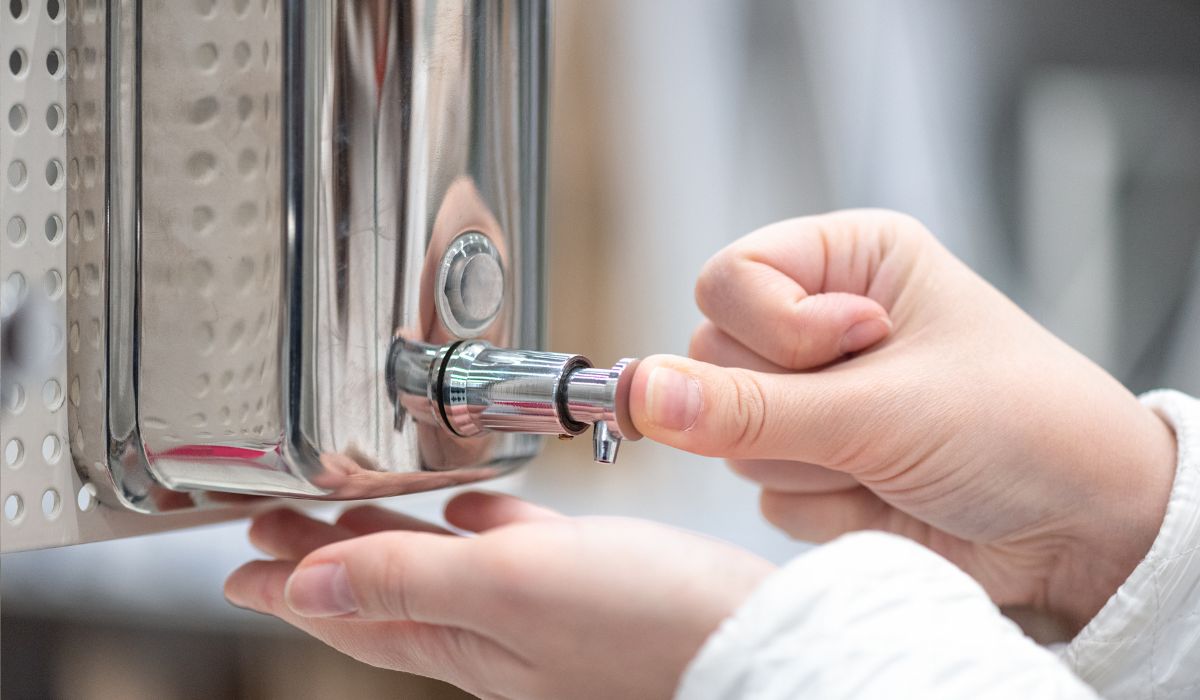
The choice of materials for public restroom fixtures often seems like a purely technical decision, but in practice, it has a direct impact on facility maintenance costs, hygiene standards, the durability of the fixtures, and the overall user experience. Stainless steel and ABS plastic are currently the two most commonly used materials in dispensers, hand dryers, paper holders, trash cans, and restroom accessories. Each has its own specific applications, but not every material is suitable for every restroom.
This article was written from the perspective of a manufacturer and distributor of public restroom equipment. At Faneco, we design and deliver solutions on a daily basis for facilities with a wide range of traffic volumes and operational requirements. This allows us to see how steel and ABS perform not only in the catalog, but above all after months and years of real-world use.
How is stainless steel different from ABS?
Based on manufacturers’ claims, the differences seem obvious. Steel is durable and sturdy, while ABS is lightweight and less expensive. In practice, however, the differences are more complex and relate not only to the material itself but also to how the toilet is used.
The stainless steel used in sanitary fixtures is most often AISI 304 or 430. Its key characteristics include high mechanical strength, resistance to moisture, suitability for intensive disinfection, and chemical neutrality. Steel does not absorb odors, does not discolor when exposed to cleaning agents, and does not age visually in the same way that plastics do.
ABS is an engineering plastic with good impact strength and crack resistance. It is lightweight, easy to mold, and less expensive to produce. In modern plumbing fixtures, ABS is often reinforced and UV-stabilized, which significantly improves its durability compared to the inexpensive plastics of years past.
The problem arises when both materials are treated as interchangeable in every situation. In reality, their behavior under intensive use is completely different.
Mechanical durability and vandal resistance
In public facilities, random factors cannot be ignored. Impacts, jostling, attempts to force doors open, and sometimes deliberate vandalism are a daily occurrence in many locations.
Stainless steel has a clear advantage here. Its resistance to impact and deformation ensures that even after many years of intensive use, the dispenser or container remains fully functional. Scratches are usually superficial and do not affect the product’s performance. Importantly, steel does not crack, which means there are no sharp edges and a lower risk of needing immediate replacement.
ABS performs well under normal use, but its limitations become apparent more quickly in locations with a high risk of vandalism. Cracks, broken latches, and permanent deformation are the most common reasons for replacing plastic components. In schools, train stations, stadiums, or 24/7 facilities, the difference in service life can be several times greater.
In practice, this means that stainless steel is sometimes more expensive initially, but significantly cheaper over the product’s entire life cycle.
Hygiene and Resistance to Cleaning Products
A public restroom is a place where regular and thorough disinfection is not an option, but a necessity. The materials used in the fixtures must be able to withstand this without deteriorating.
Stainless steel withstands contact with alcohol, chlorine-based products, disinfectants, and frequent washing with hot water very well. It does not absorb moisture or odors, and its smooth surface prevents the buildup of biological contaminants.
ABS, even high-quality ABS, is more sensitive to harsh chemicals. Prolonged use of strong cleaning agents can lead to a dull surface, microcracks, or discoloration. In facilities where cleaning takes place several times a day using strong cleaning agents, the difference in appearance after two or three years can be very noticeable.
The conclusion is simple: the higher the hygiene standards and the more frequent the cleaning, the more sense it makes to use stainless steel.
Aesthetics and Users’ Perception of the Facility
The fixtures in a restroom are one of the elements that users evaluate subconsciously. Even if they can’t pinpoint a specific reason, the “impression of sturdiness” or “cheapness” forms within a few seconds.
Stainless steel is associated with durability, professionalism, and high standards. That is why it is so often used in airports, modern office buildings, hotels, premium facilities, and public institutions that want to project an image of quality.
ABS offers greater flexibility in color choices and can be visually neutral, which works well in schools, preschools, or facilities where the aesthetic is meant to be inviting rather than “technical.” To be fair, however, after a few years of heavy use, the visual differences between steel and plastic become increasingly apparent.
Costs. Purchase Price vs. Total Cost
One of the most common mistakes in planning restroom fixtures is focusing solely on the unit price of a product.
ABS has the edge when it comes to the purchase decision. It’s cheaper, lighter, and often available in a wide range of models. With a limited investment budget, that’s an argument that can’t be ignored.
Stainless steel comes out on top in the long run. Fewer replacements, lower maintenance costs, greater resistance to damage, and a longer service life mean that, in many facilities, the total cost of ownership for stainless steel equipment is lower, despite its higher initial price.
Our design analyses show that in high-traffic facilities, steel becomes more cost-effective after just two or three years of use.
When is ABS fully justified?
ABS plastic is not an “inferior” material. It is the right material for specific conditions.
It works very well for:
- restrooms with low to moderate traffic
- offices and small service facilities
- educational institutions, where ease of use and safety are key
- places where the initial investment cost is a key factor
The key is to choose high-quality products and to be aware that their service life will be shorter than that of steel.
When is stainless steel the safer choice?
There are situations where stainless steel isn’t a “premium option,” but rather a sensible standard.
This applies to:
- restrooms with very high traffic
- properties vulnerable to vandalism
- hospitals, train stations, shopping malls
- 24-hour facilities
- investments where the long-term maintenance cost is a key factor
In such situations, the difference in durability and reliability quickly becomes apparent in the operating budget.
The Most Common Mistakes When Choosing a Material
The first mistake is treating ABS and steel as products that “differ only in price.” The second is choosing steel for applications where its potential will never be fully realized. The third is cutting corners on product quality rather than on materials.
The best public restroom designs aren’t extreme. They often combine stainless steel in the parts most prone to damage with high-quality ABS where it makes economic sense.
How We Approach This at Faneco
At Faneco, we don’t sell materials—we sell solutions. We begin every project by discussing the nature of the facility, the number of users, the cleaning methods, and the expected service life. Only then do we recommend specific products, materials, and configurations.
As a result, the investor doesn’t pay for either “over-engineered durability” or for apparent savings that ultimately result in maintenance and replacements.
Summary
Stainless steel and ABS are not direct competitors. Each of these materials has its own merits, but only when selected for the actual conditions in which it will be used.
If a toilet is expected to last for years in harsh conditions, stainless steel is an investment in peace of mind and reliability. If the facility has lower usage and budget is a key consideration, high-quality ABS is a sensible choice.
The worst decision is to choose “blindly,” without analyzing the options. The best decision is one that takes into account not only the price, but also the actual costs of use and maintenance. This is precisely the foundation of our consulting services and the production of public restroom fixtures at Faneco.